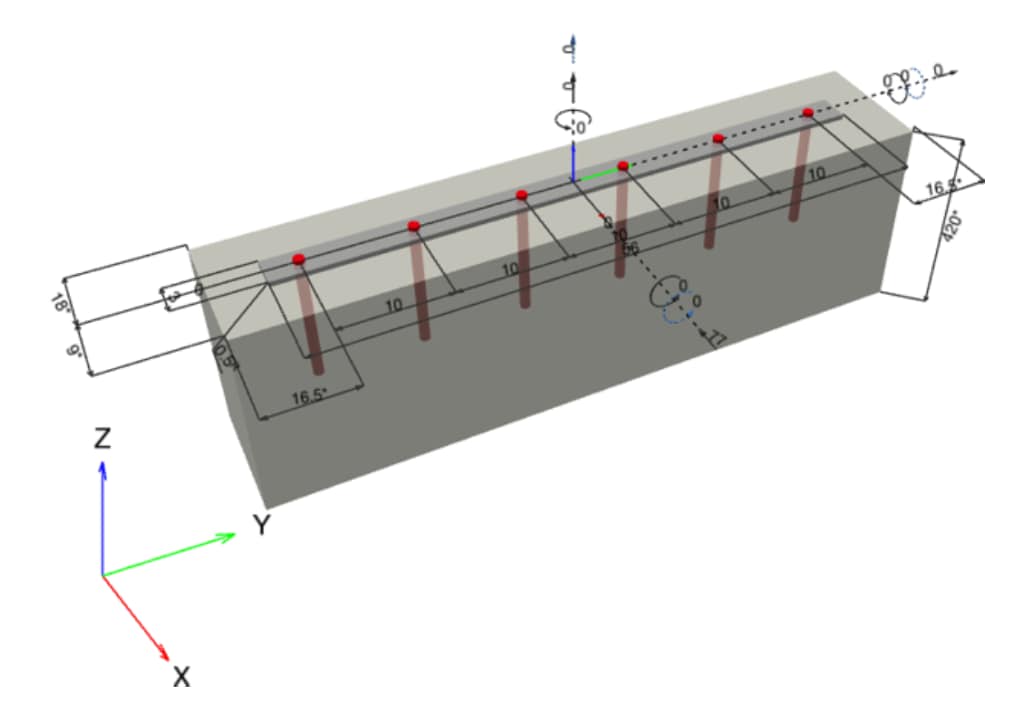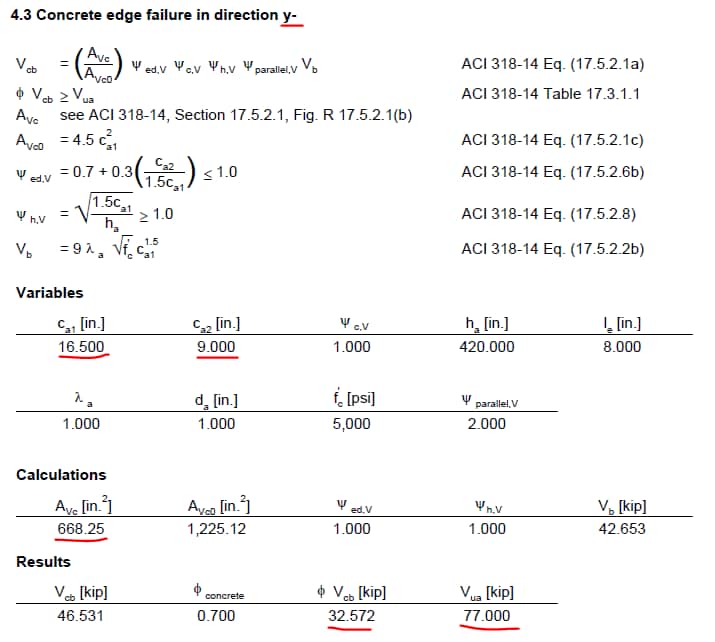
As I observed, Hilti PROFIS Engineering - 3.1.2 check also the shear concrete breakout considering ACI 318-14 Fig. R17.5.2.1d.
My question is, why PROFIS considering the whole shear load (Vtotal) instead of shear load acting on the anchor nearest to the corner (V/4)?
See attached snapshot. Note that anchors are equally spaced.

Thank you for your question Engr. Arvie.
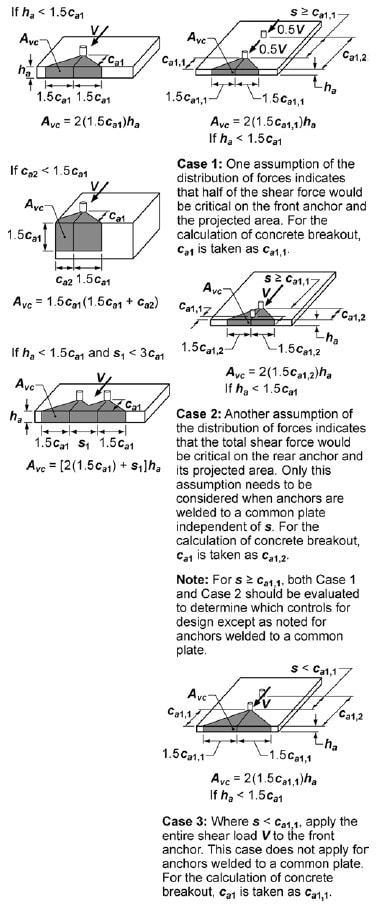
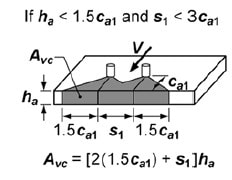
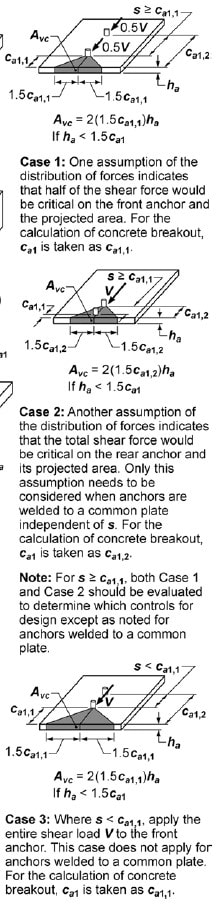
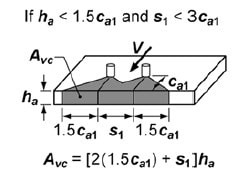
In ACI 318-14, the shear load direction is considered to determine the load distribution per anchor. Upon checking the figure R17.5.2.1d where you have included additional anchors, the load direction is perpendicular to the anchor group alignment. The calculation of projected area of failure surface Avc, will be calculated based on the left images in figure R17.5.2.1b (see attached file). If the shear load direction is parallel to the anchor group alignment and pointing to the edge, then the right images with 3 cases will be applicable indicated in figure R17.5.2.1b.
Note also that the figure R17.5.2.1d applies only for a singe anchor mentioned in the last part of commentary section R17.5.2.1.
Please let me know if this answers your question.
Hi Carlo,
Thank you for your reply.
Understand your explanation. Now, I wonder why PROFIS consider the total shear load on checking the concrete breakout considering Fig. R17.5.2.1d.
I have a sample design here, see Attachment-1.
Attachment-2 shows the result of concrete breakout check where it applies the checking of R17.5.2.1d but uses the total shear load instead of shear load acting on the corner anchor.